
Call 01252 214067

Gas interlocks in commercial kitchens: how they work and why they fail

A gas interlock links a commercial kitchen’s mechanical ventilation to its gas supply, so that if the ventilation fails, the gas to the cooking appliances is shut off. New and updated ventilation systems are required to be interlocked with the gas supply, and the interlock is checked on every CP42 gas safety inspection, together with an air test.

Published By RW Commercial Catering Engineers

What is a gas interlock?

A gas interlock is a safety system that connects the mechanical ventilation in a commercial kitchen to the gas supply for the cooking appliances. HSE’s catering guidance sets out what it must do: if the ventilation system fails, the gas supply to the appliances is shut off.

The reason is combustion. Gas cooking produces heat, fumes and products of combustion, and the ventilation removes them and brings in replacement air so the burners have enough air to burn properly. HSE warns that without enough replacement air, combustion products such as carbon monoxide can build up, and that if a mechanical ventilation system fails, the kitchen may become unsafe or unfit for work.

Does your kitchen need a gas interlock?

If the kitchen has gas cooking and mechanical ventilation that is new or has been updated, yes. New and updated ventilation systems in commercial kitchens are required to be interlocked with the gas supply. The requirement comes from BS 6173, the British Standard for installing and maintaining gas-fired catering appliances, whose current edition is BS 6173:2020. HSE’s guidance says the installer should fit an appropriate interlock between any mechanical ventilation system and the gas appliances, and that manual bypasses are not permitted.

Interlock design is covered in more detail by IGEM/UP/19, the Institution of Gas Engineers and Managers’ standard on interlock devices for gas appliances in commercial catering. Its second edition was published in July 2022 and supports the interlock requirements of BS 6173.

The law comes into it too. Under the Gas Safety (Installation and Use) Regulations 1998, where a kitchen’s extraction serves as the flue for a gas appliance that needs one, HSE treats it as a flue that requires an appropriate interlocking system.

What about older kitchens without one?

HSE points out that BS 6173 is not retrospective and that many existing installations do not meet it. A kitchen without an interlock does not fail automatically, but the risk must be assessed and, if a risk is likely, prevented or controlled. These are the factors HSE lists:

Raises the riskLowers the risk
Ventilation that is unreliable or not usedA well-maintained ventilation system
Broken fans, leaking ductwork, cooking fumes or steam escapingSatisfactory fume removal through the ductwork by natural draught alone
A small roomA large room
Poor general ventilationGood natural ventilation
Gas appliances used heavily for long periods without working ventilationLittle use of gas appliances
An ageing system with no routine or planned maintenanceA modern ventilation system
Staff unaware of the effect of using gas without ventilationStaff who know the risk, written procedures for using the ventilation, and permanent notices that appliances must not be used without it

How is a gas interlock tested during a CP42?

The interlock is part of the kitchen-wide checks on a CP42 gas safety inspection, before each appliance is tested. Gas Safe Register says the inspection covers the safety devices of the appliances and of the ventilation, and an air test with the appliances and the ventilation running.

  • The interlock itself. The engineer checks that it does its job: that the gas to the appliances shuts off when the ventilation stops.
  • Bypasses. A switch or link that lets the gas run without the ventilation is a fault in itself, because HSE says manual bypasses are not permitted.
  • The air test. Carbon dioxide levels are measured with the appliances and the ventilation running, to show the ventilation is clearing the products of combustion.

Because the air test needs the cooking appliances and the extraction running together, plan the inspection outside service. As a guide, a CP42 for a kitchen with five gas appliances takes us around one to two hours.
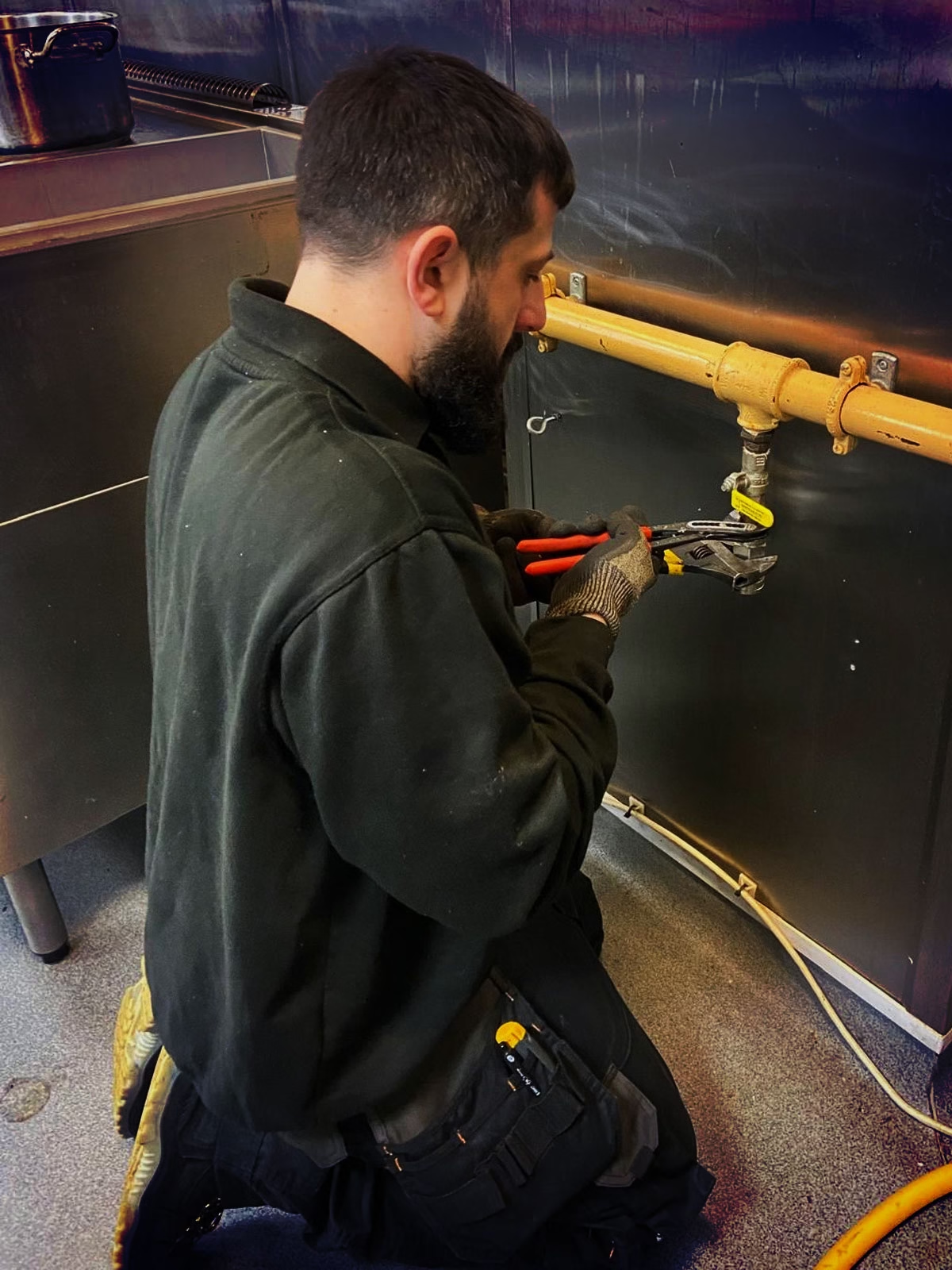
An engineer working on a valve on the yellow gas supply pipework in a commercial kitchen

Why do gas interlocks fail inspections?

An interlock check fails when the engineer finds any of these:

  • No interlock where one is required, for example after the extraction has been replaced or altered.
  • A bypass that lets the gas run without the ventilation.
  • Gas that does not shut off when the ventilation stops.
  • Ventilation that is not working properly: broken fans, leaking ductwork or fumes escaping into the kitchen.
  • An air test showing that combustion products are not being cleared, for example because the burners are short of replacement air.
Book a CP42 inspection

What happens if the interlock fails?

The engineer deals with it under the Gas Industry Unsafe Situations Procedure, like any unsafe situation found on a CP42. Depending on the risk, the installation may be classed At Risk, when the engineer asks your permission to turn it off, or Immediately Dangerous, when they ask to disconnect it. Either way the advice is not to use it until it is put right. Regulation 34 of the Gas Safety (Installation and Use) Regulations 1998 says the person responsible must not use, or let anyone use, an appliance they know or suspect is dangerous.

The engineer will explain what has failed and what is needed to put it right, and HSE expects them to give you information on the relevant standard and whether upgrading the installation is practicable. Because an interlock depends on the ventilation, the fix may need the company that installed or maintains your extraction. We test the interlock and carry out the air test on every CP42 inspection, but we do not install or service extraction and ventilation systems. Once the work is done, have the interlock tested again.

What can kitchen staff do?

  • Switch the ventilation on before using the gas appliances, and never bypass or override an interlock.
  • Report fans that have stopped, fumes or steam that are not clearing, and gas that cuts out during service.
  • Keep the canopy and ductwork clean. HSE says ductwork should be cleaned regularly to stop grease and fat building up.
  • If you have any concern about gas safety, do not wait for the next routine visit. HSE’s advice is to get urgent advice from a competent gas engineer and, where necessary, a ventilation expert.

Gas interlock questions

Is a gas interlock a legal requirement?

The law requires gas appliances, pipework and flues at work to be kept safe, and where the extraction acts as the flue for a gas appliance, HSE says it needs an appropriate interlock. BS 6173 requires new and updated ventilation systems to be interlocked with the gas supply. A British Standard is not law in itself, but HSE describes British Standards as agreed good practice.

Will an older kitchen without an interlock fail its CP42?

Not automatically. BS 6173 is not retrospective, so the engineer assesses the risk from the factors in the table above. If the risk is too high, the installation can be classed At Risk or Immediately Dangerous.

Is a carbon monoxide alarm enough instead?

No. HSE says carbon monoxide and carbon dioxide alarms are only warning devices, and that domestic carbon monoxide alarms are not normally suitable for commercial kitchens. Where an alarm system is fitted, it should sound an alarm and be linked to an automatic gas shut-off that needs someone to restore the gas by hand. The main safeguard is still ventilation that works.

How often should the gas interlock be checked?

At every CP42 inspection, and Gas Safe Register advises that the gas equipment and the extraction and ventilation in a commercial kitchen are checked for safe operation every year. Have it checked again whenever the ventilation is replaced or altered.

Why does the gas on our cookline keep cutting out?

If the gas cuts out during service, the interlock may be doing its job because the ventilation is failing. HSE notes that effective maintenance and cleaning help prevent these shutdowns. Do not bypass the interlock to keep cooking: stop using the gas appliances and have a gas engineer find the cause.

Have your interlock tested

Our CP42 gas safety inspections include the gas interlock and the air test. Tell us how many gas appliances you have and where your kitchen is, and we will arrange a visit around your service.

Contact us

Whether it is a general enquiry or something specific, give us a call or send us a message and we will get straight back to you.

Call us today

01252 214067

service@rwcce.co.uk

Monday to Friday, 9am to 5pm

Book a CP42 inspection
Call 01252 214067 Contact Us