
Call 01252 214067

What is a CP42 gas certificate?

A CP42 is the gas safety record for a commercial kitchen. A Gas Safe registered engineer qualified for catering work checks your gas appliances, pipework, ventilation and gas interlock, and records the results. The law does not name the CP42, but it does require gas equipment at work to be kept safe, and HSE guidance gives a yearly inspection as a reasonable minimum.

Published By RW Commercial Catering Engineers

What is a CP42 certificate?

CP42 is the reference of a widely used form for recording a gas safety inspection in a commercial catering kitchen, and the name has stuck for the certificate itself. You may also see it called a commercial catering gas safety record or inspection record. The form matters less than what it records: that a qualified engineer has checked the kitchen’s gas installation and found it safe, or found faults and dealt with them.

A CP42 is not the same as a landlord’s gas safety record, which covers gas appliances in homes and other places where people live.

Is a CP42 a legal requirement?

Not by name. Regulation 35 of the Gas Safety (Installation and Use) Regulations 1998 requires every employer and self-employed person to make sure that any gas appliance, installation pipework or flue at a place of work under their control is maintained in a safe condition. The regulation does not say how often it must be checked or what paperwork proves it.

In practice, a current CP42 is how a kitchen shows it is meeting that duty. Gas Safe Register advises that the gas equipment and the extraction and ventilation in a commercial kitchen are checked for safe operation every year, and HSE’s catering guidance says annual inspections are a reasonable minimum. Some councils put it more plainly: the London Borough of Hillingdon tells food businesses to hold a valid annual gas safety certificate.

There is one strict yearly duty. Landlords must have the gas appliances and flues in accommodation they let checked every 12 months and give the occupant a copy of the record within 28 days, and HSE notes that this covers hotels, guest houses and staff accommodation. A hotel can therefore have both duties at once: the kitchen under regulation 35 and the bedrooms under the landlord’s check.

Who will ask to see your CP42?

WhoWhat they look for
An environmental health officer from your council (restaurants, pubs, hotels and care homes)Evidence of ongoing maintenance of your gas appliances. Gas Safe Register says that without it, or if there are safety concerns, the officer may serve a formal notice setting out what you must do.
An HSE inspector (schools, colleges and nursing homes, where HSE enforces health and safety)The same regulation 35 duty. HSE’s catering guidance, which gives the yearly inspection, says health and safety inspectors may refer to it.
Your insurerWhatever your policy wording sets out about maintaining gas equipment. Check the conditions in your policy, or ask your broker.
Your landlord or managing agentWhatever your lease sets out, so read its repair and compliance clauses.

How often do you need a CP42?

At least once a year. HSE says the frequency depends on the equipment and how it is used, and should follow the manufacturer’s recommendations, with annual inspections as a reasonable minimum. Gas Safe Register notes that the longest gap between services most manufacturers allow is 12 months.

Book a check sooner when:

  • new or second-hand gas appliances are installed, which is work for a Gas Safe registered engineer, including commissioning;
  • the ventilation or extraction is replaced or altered, because new and updated systems are required to be interlocked with the gas supply;
  • you have any doubt about an appliance. HSE’s advice is not to wait for the next routine visit but to get urgent advice from a competent gas engineer.
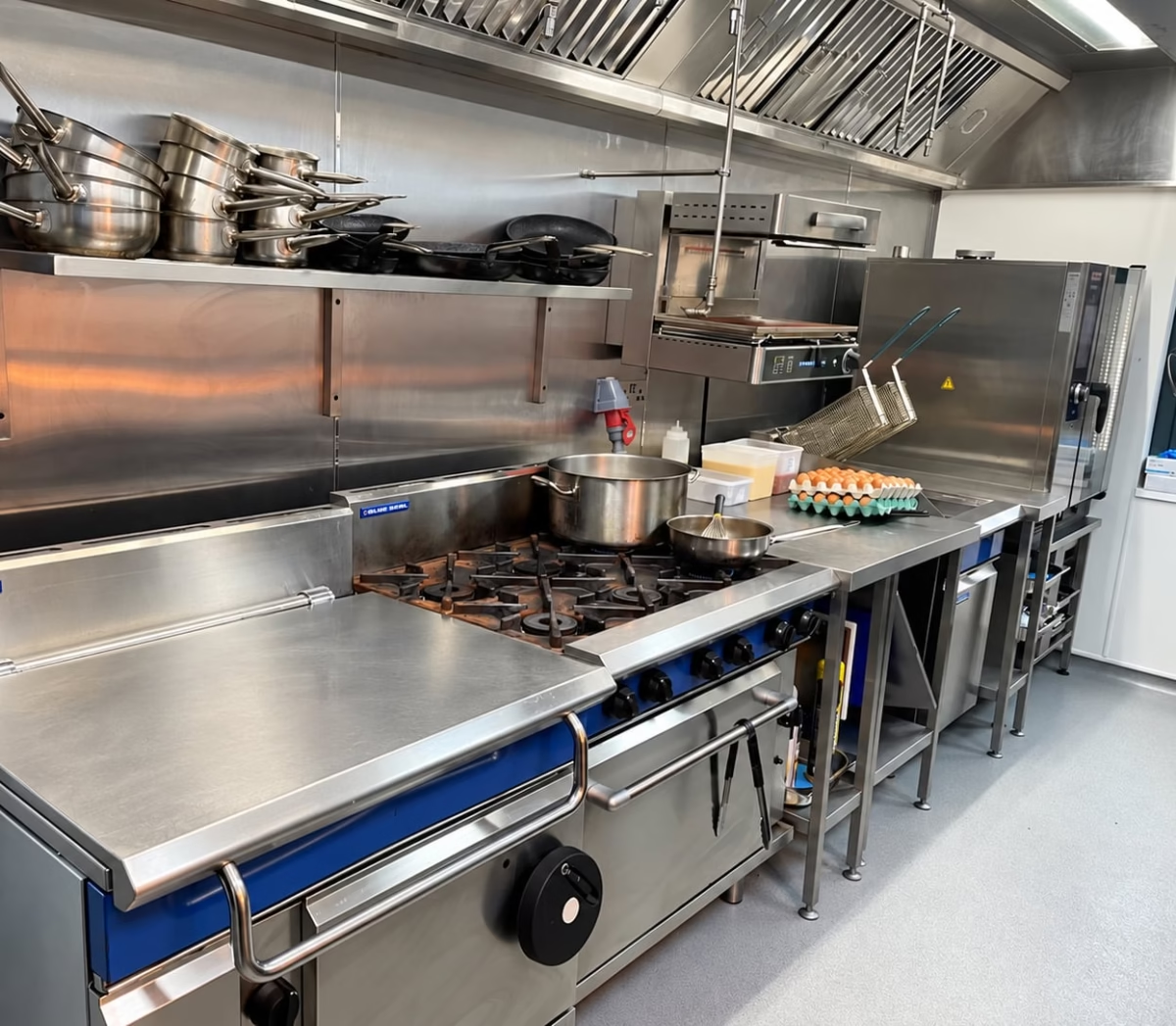
A commercial cookline with Blue Seal gas ranges under an extraction canopy

What will the engineer check?

A CP42 inspection looks at the whole kitchen first and then at each gas appliance:

  • The gas pipework in the kitchen, tested for soundness.
  • An air test: carbon dioxide levels measured with the appliances and the ventilation running.
  • The interlock that shuts off the gas if the extraction stops.
  • Each appliance’s working pressure, flame picture and safety devices, including the flame supervision devices that cut the gas if a flame goes out.

Because the air test needs everything running, plan the visit outside service. As a guide, a kitchen with five gas appliances takes us around one to two hours.

How our CP42 inspections work

What happens if an appliance fails?

The engineer follows the Gas Industry Unsafe Situations Procedure, which sorts unsafe appliances into two classes:

  • Immediately Dangerous: a danger to life or property if it is used or left connected. With your permission it is disconnected, and it must not be used until it is repaired.
  • At Risk: a fault that could be a danger without anything else going wrong. With your permission it is turned off, and it should not be used until it is repaired.

Regulation 34 says the person responsible for the premises must not use an appliance, or let anyone else use it, if they know or suspect it is dangerous. If permission to disconnect an Immediately Dangerous natural gas appliance is refused, the engineer reports it to the gas emergency service. HSE points out that these classifications are unlikely where proper regular maintenance has been done, which is what planned preventative maintenance is for.

If we find a fault and the parts are on our van, we can repair it on the same visit. If not, we send you a quote to put it right.

Who can issue a CP42?

Only a Gas Safe registered engineer who is qualified for commercial catering work and for the type of gas you use, natural gas or LPG. Gas Safe Register stresses that these are specific qualifications that not every gas engineer holds, and that the onus is on you to check.

Ask to see the engineer’s Gas Safe ID card, which shows the categories of gas work they are registered for, then check it on the Gas Safe Register website or by calling 0800 408 5500. Our Gas Safe registration number is 662257, and our engineers’ cards cover commercial catering on natural gas and LPG.

CP42 certificate questions

Is a CP42 the same as a landlord gas safety certificate?

No. A landlord’s gas safety record covers gas appliances and flues in accommodation that is let, such as flats, hotel bedrooms and staff accommodation, and the check must be repeated every 12 months by law. A CP42 records the gas safety inspection of a commercial catering kitchen.

How long is a CP42 valid for?

The law sets no expiry date, but the record shows when the next inspection is due, and Gas Safe Register and HSE both work to a yearly check. Treat a CP42 more than 12 months old as out of date.

Does a CP42 cover electric catering equipment?

No, a CP42 covers gas only. Electric ovens, fryers and dishwashers come under the Electricity at Work Regulations 1989, which require electrical equipment to be kept safe but do not set a test interval. Our guide to how often kitchen equipment should be serviced covers both.

Is a CP42 the same as a service?

No. A CP42 is a safety inspection: it records whether the installation is safe. A service cleans, adjusts and repairs the appliances so they stay safe and keep working. On our planned maintenance contracts the gas equipment is tested and a CP42 is issued as part of the service visit.

What gas checks can kitchen staff do themselves?

HSE says staff who use gas equipment should be trained to spot obvious faults: damaged pipework or connections, flame supervision devices that do not work, missing restraints, castor locks that do not hold, and any smell of gas. Competent staff may also connect and disconnect plug-in gas connections to move an appliance for cleaning. Everything else is work for a Gas Safe registered engineer.

Is your CP42 due?

We carry out CP42 gas safety inspections for commercial kitchens from our base in Church Crookham, Fleet. Tell us how many gas appliances you have and where your kitchen is, and we will arrange a visit around your service.

Contact us

Whether it is a general enquiry or something specific, give us a call or send us a message and we will get straight back to you.

Call us today

01252 214067

service@rwcce.co.uk

Monday to Friday, 9am to 5pm

Book a CP42 inspection
Call 01252 214067 Contact Us